
Data Courtesy of Amadu Massally, Author of The Gullah Geechee Saga: Through African Eyes
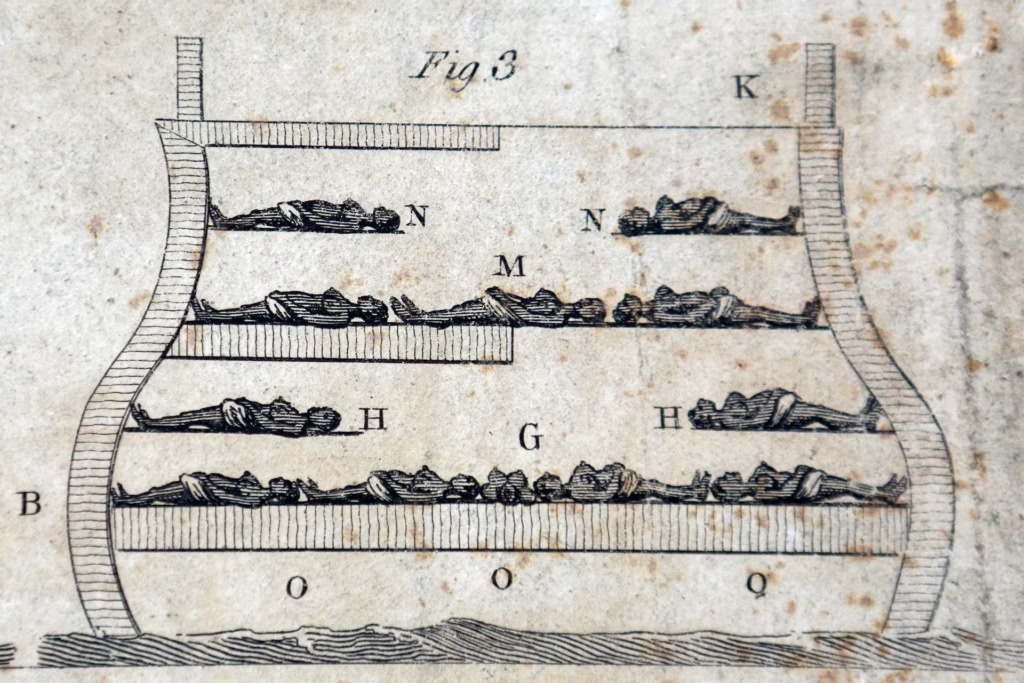
The image above is a historical diagram of a cross section of the slave ship Brookes, that illustrates how enslaved Africans were tightly packed into the ship’s hold during the middle passage of the transatlantic slave trade. The previous image reflects the view as it would be looking down.

 Colonial Disembarkation Timeline (1650–1850)
This timeline highlights the major slave-trading ports in the North American colonies and their estimated volumes of African captives received. It reflects not only the expansion of plantation economies in the South, but also the quiet complicity of Northern ports in financing, outfitting, and participating in the trade.
● Charleston, SC
Peak Activity: 1750–1800
Why: Charleston became the major port of entry for enslaved Africans brought to work in rice, indigo, and later cotton. Its proximity to the Sea Islands made it the backbone of the Gullah Geechee world.African Origins: Sierra Leone, Windward Coast, Gold Coast
● Savannah, GA
Peak Activity: 1750–1800
Why: Georgia’s rice and cotton plantations rose in tandem with Charleston’s. Often received enslaved captives rerouted from Charleston.
African Origins: Sierra Leone, Senegambia
● Norfolk, VA
Peak Activity: 1700–1750
Why: Fueled Virginia’s booming tobacco economy. Also received Africans through intra-American trade from the Caribbean.
African Origins: Bight of Biafra, West Central Africa
● Newport, RI
Peak Activity: 1700–1750
Why: Leading U.S. port in the business of slavery. Outfitted slave ships, distilled rum for exchange in Africa, and held captives.
African Origins: Bight of Benin, Gold Coast
● Boston, MA
Peak Activity: 1650–1750
Why: Early colonial slaving center. Saw declining participation as trade shifted south.
African Origins: Senegambia, Gold Coast
● New York, NY
Peak Activity: 1700–1750
Why: Economic center for Dutch and British merchants. Enslaved labor supported port construction and domestic industries.
African Origins: Bight of Biafra, Gold Coast
Historical Insight:
The North did not escape slavery. It helped fund it.
The South did not operate alone. It was part of a system.
Let this timeline serve as a foundation for your understanding of how every region of the colonies contributed to shaping the African diaspora in the Americas.


